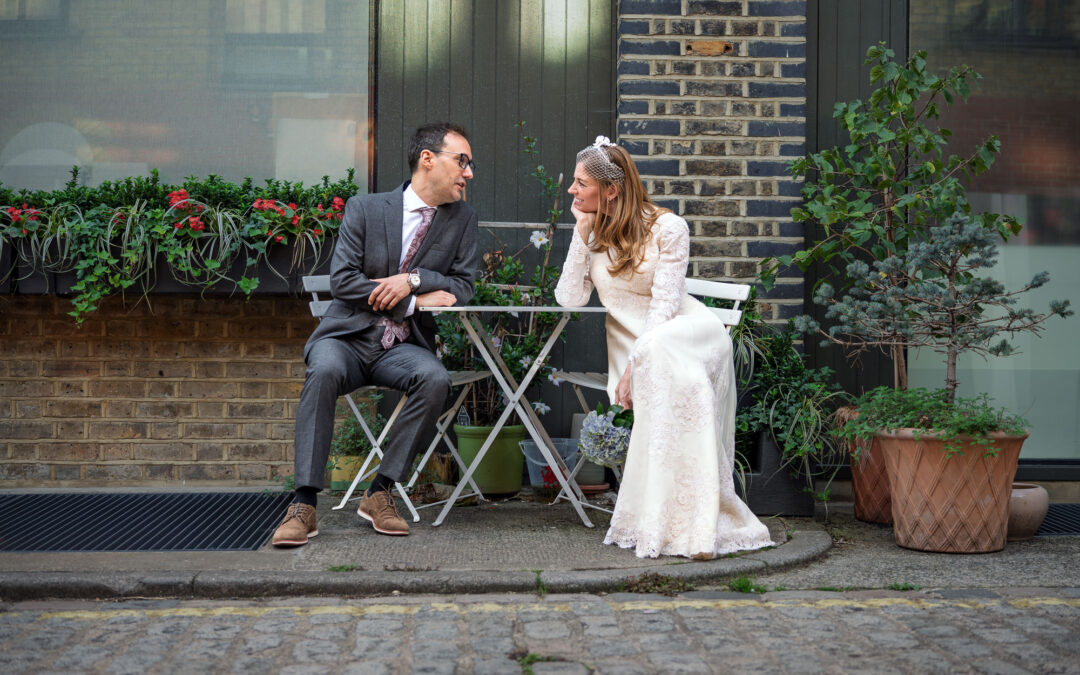
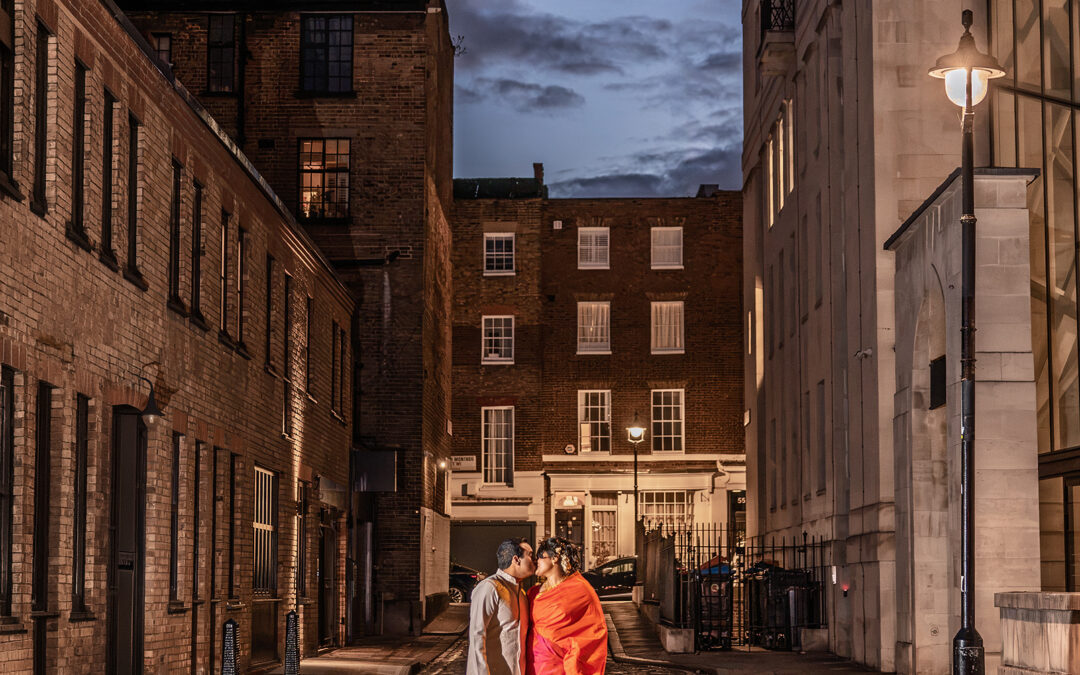
I’ve taught posing to other photographers at WPPI and the SWPP, and the thing I say first is always the same: the best posing doesn’t look posed. Couples don’t want to look arranged. They want to look like themselves on a very good day, in very good light.
So this is how I actually do it, written for photographers, and for couples who want to know what to expect.
Light first, pose second
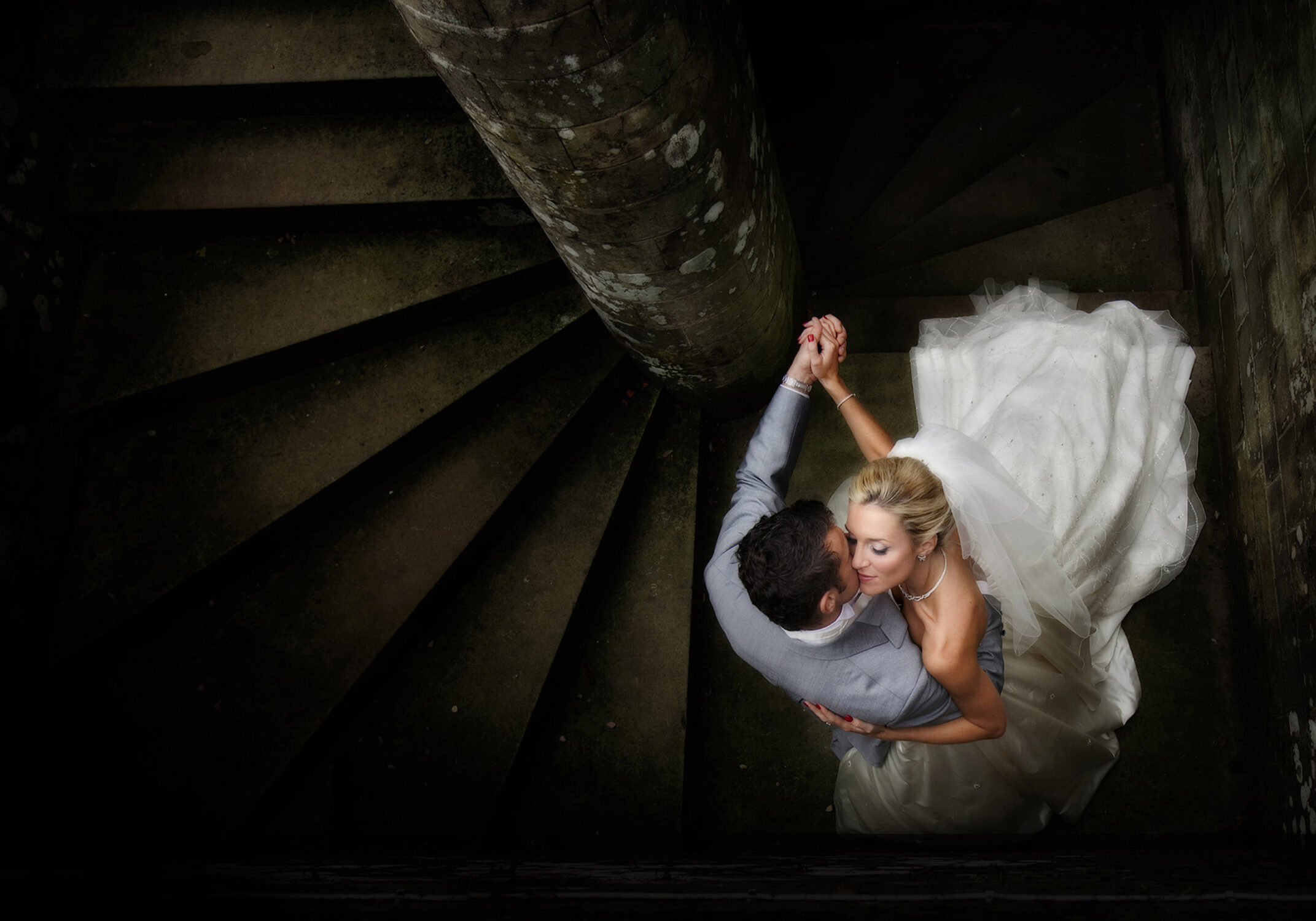
I find the light before I think about where anyone stands. One good source, a window, a doorway, low sun, and I put the couple in it. A perfect pose in flat light is a forgettable picture. An ordinary pose in beautiful light usually isn’t.
Direct, don’t arrange
I don’t move people like furniture. I give them something to do: walk towards me, turn to each other, say something to make him laugh. The pose comes out of the action, and the expression comes with it.
Small corrections, not big ones
Most of what I actually say is small. Weight on the back foot. Chin down a touch. Hands soft, not gripping. Stand a little closer than feels natural. Those four or five adjustments make more difference than any named pose.
Hands
Hands are where posing usually goes wrong. Give them a job: on a lapel, in a pocket, holding the bouquet low, resting on a shoulder. Hands with nothing to do end up clenched or dangling, and it shows.

Keep it short
At a wedding the portraits take fifteen or twenty minutes. That’s enough for three or four good set-ups if you’ve found them beforehand. Any longer and the couple start to feel like models rather than people who’ve just got married, and it shows in their faces.
Ten poses that work
None of these are rules. They’re starting points, and the good pictures usually happen a few seconds either side of them.
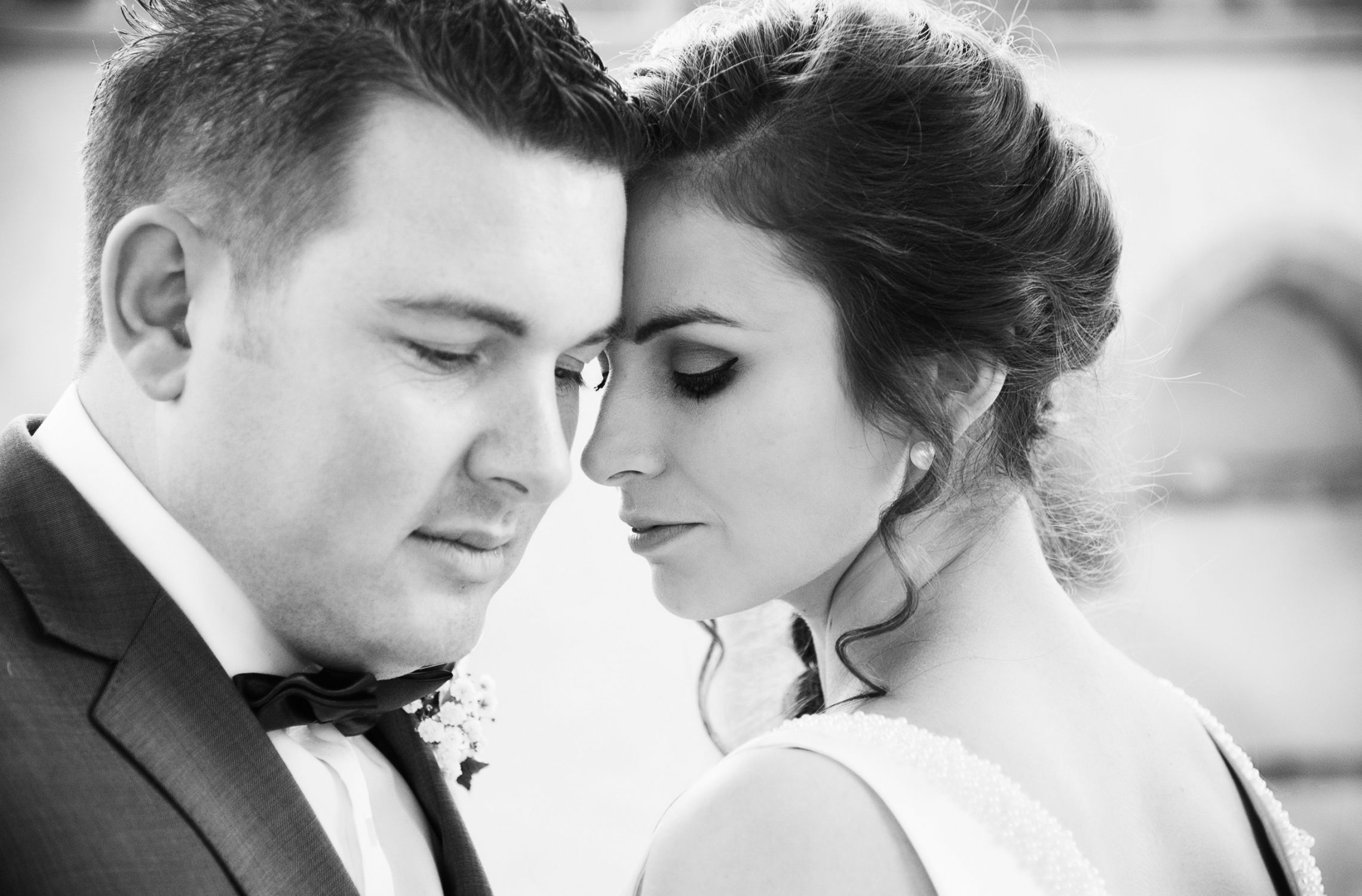
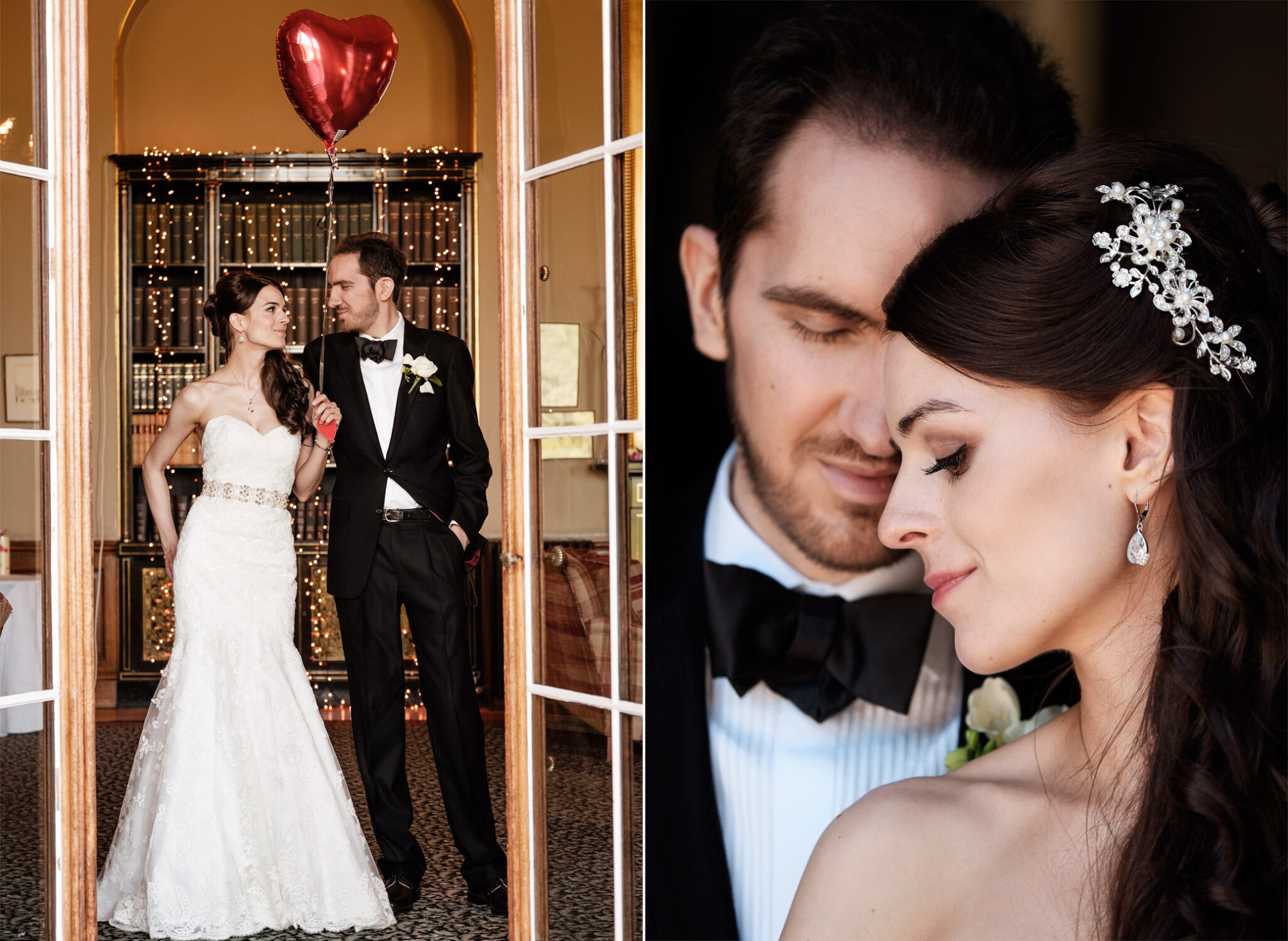
- Foreheads together. Close, eyes down or closed. Quiet and intimate, and almost everyone relaxes into it.
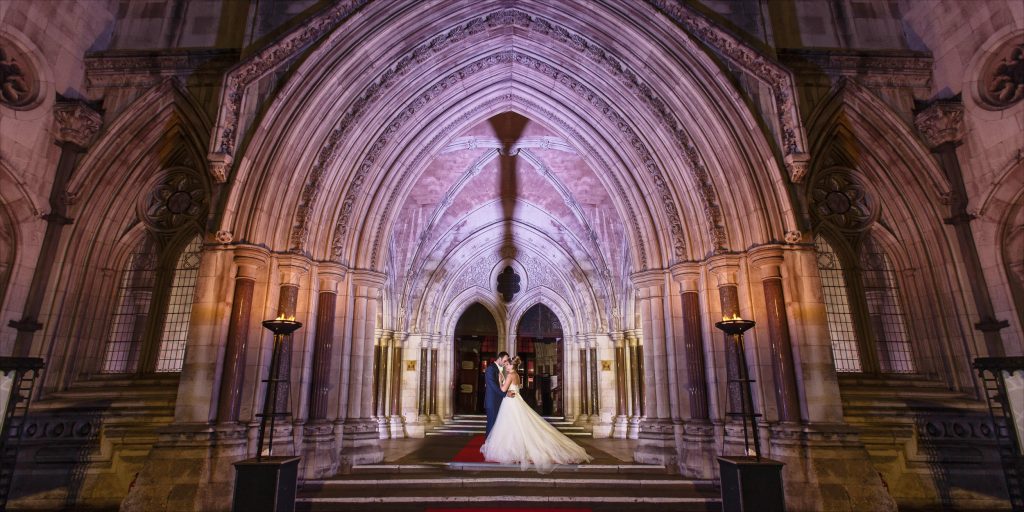
- The dip. Dramatic and a bit playful. Do it once, fast, and let them laugh afterwards. The laugh is often the better frame.
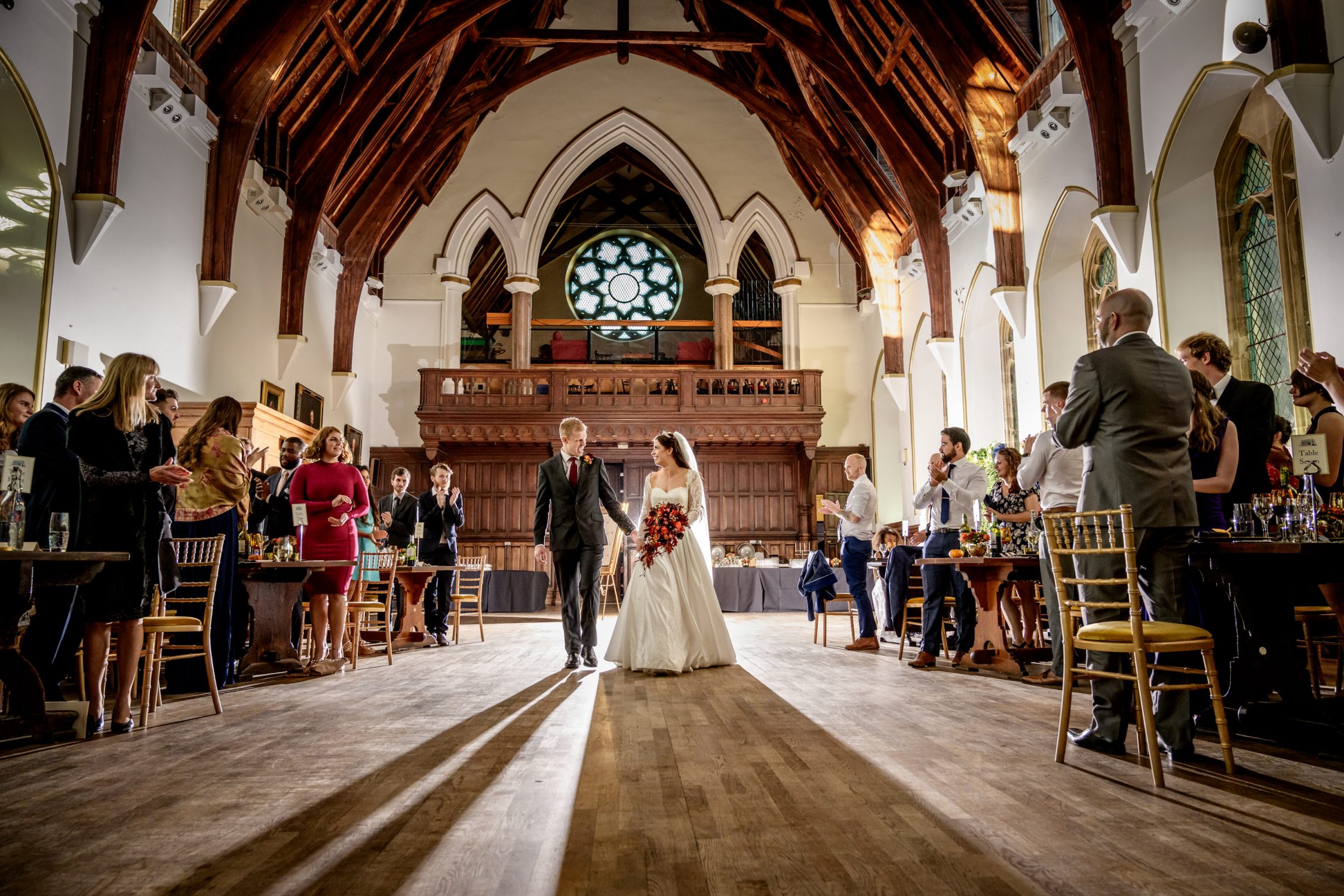
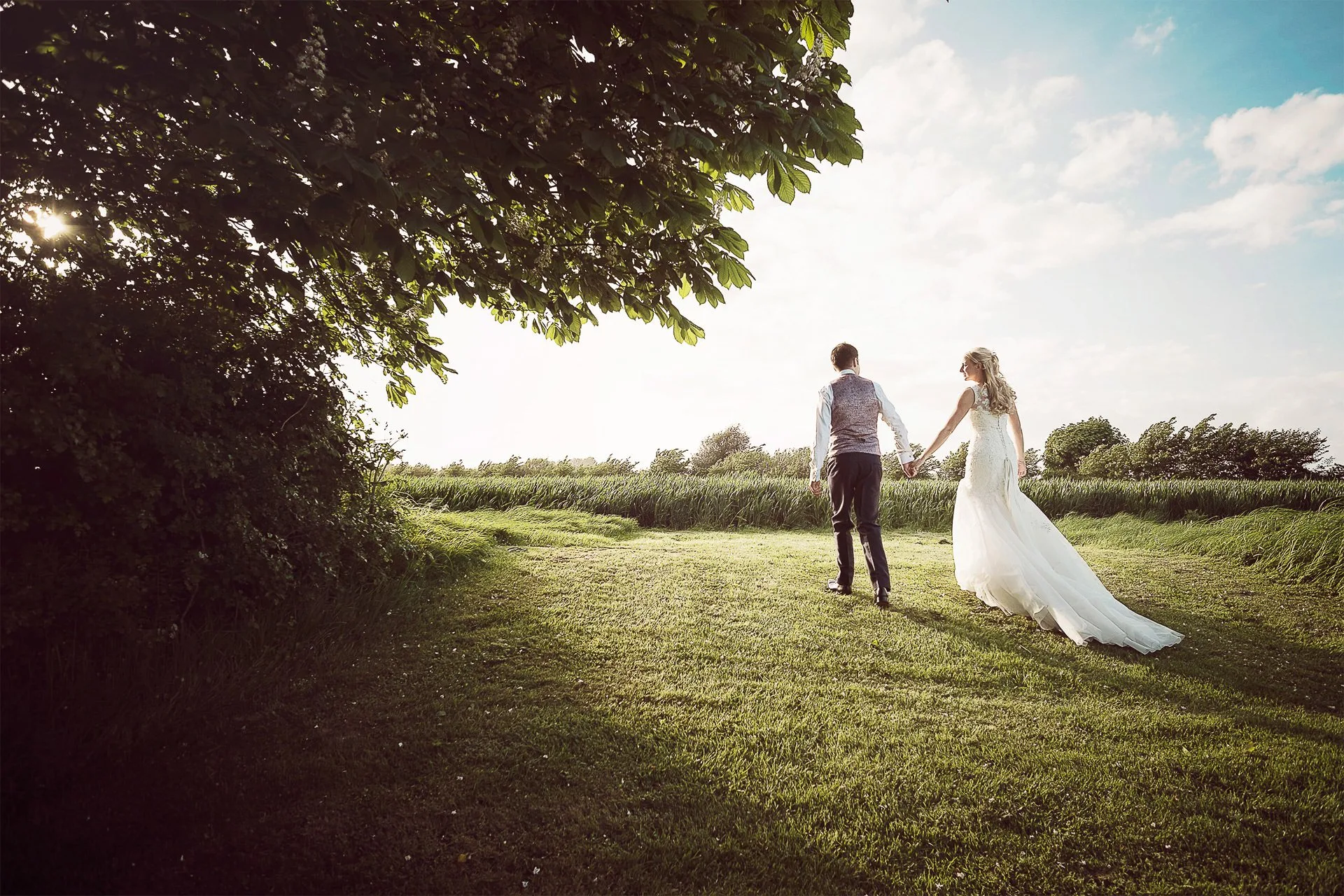
- The walk. Hand in hand, towards me or away. Tell them to talk to each other, not to look at the camera.
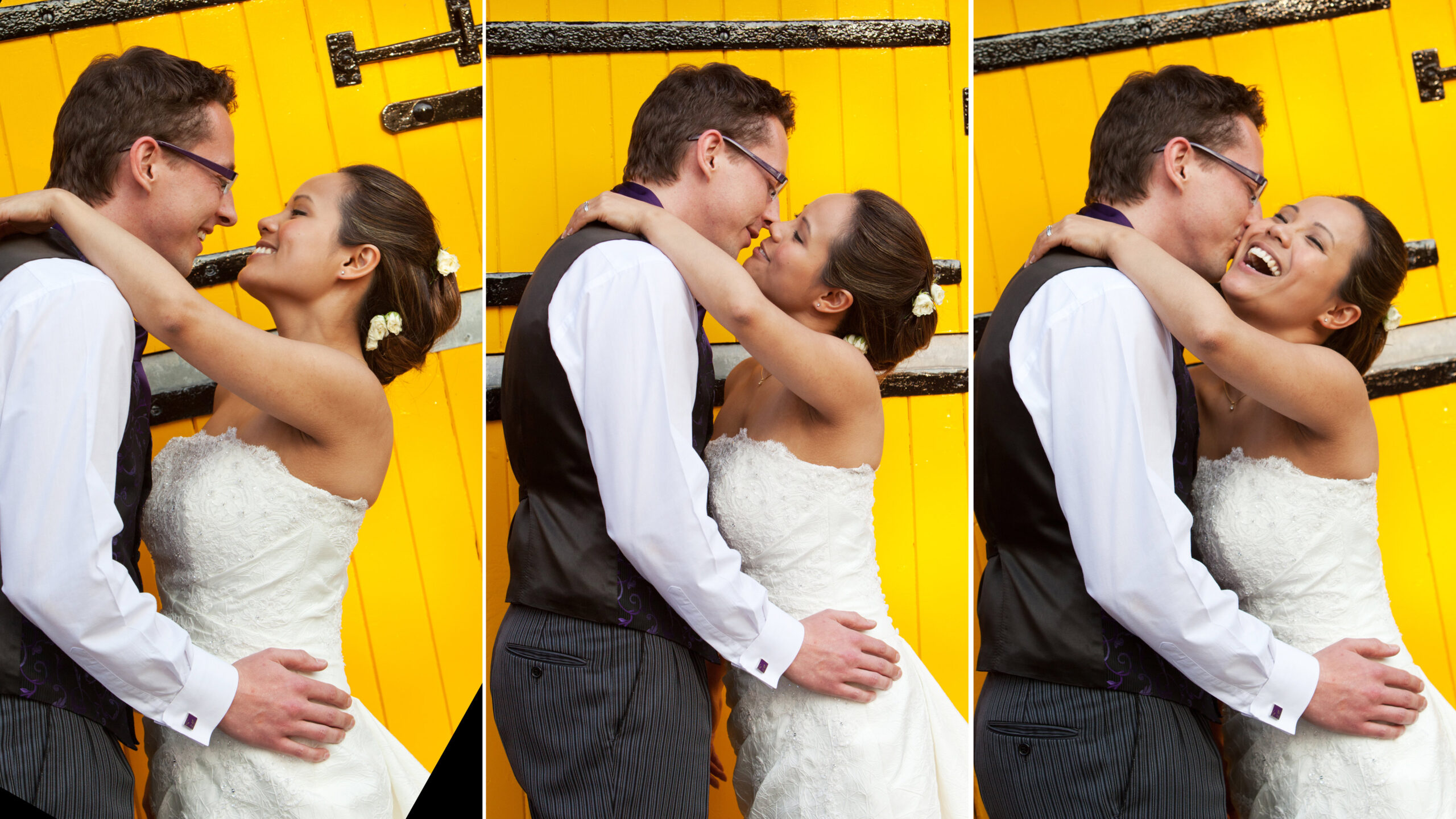
- The whisper. He says something in her ear. What he says is up to him. The reaction is the picture.
- Under the veil. The veil softens everything and frames both faces. Best with the light behind it.
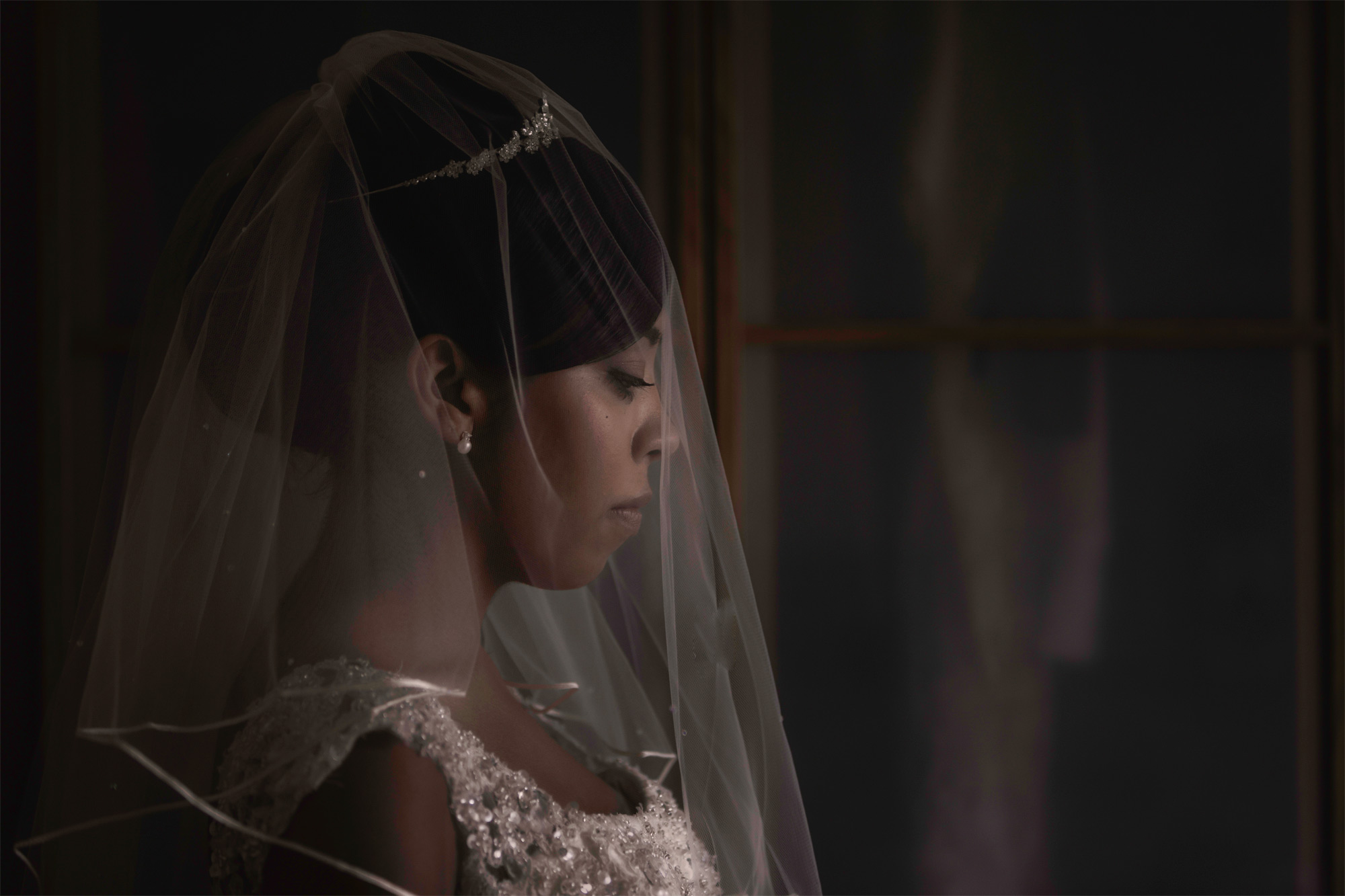
- From behind. His arms around her waist, both looking the same way. Simple, and it suits almost every couple.
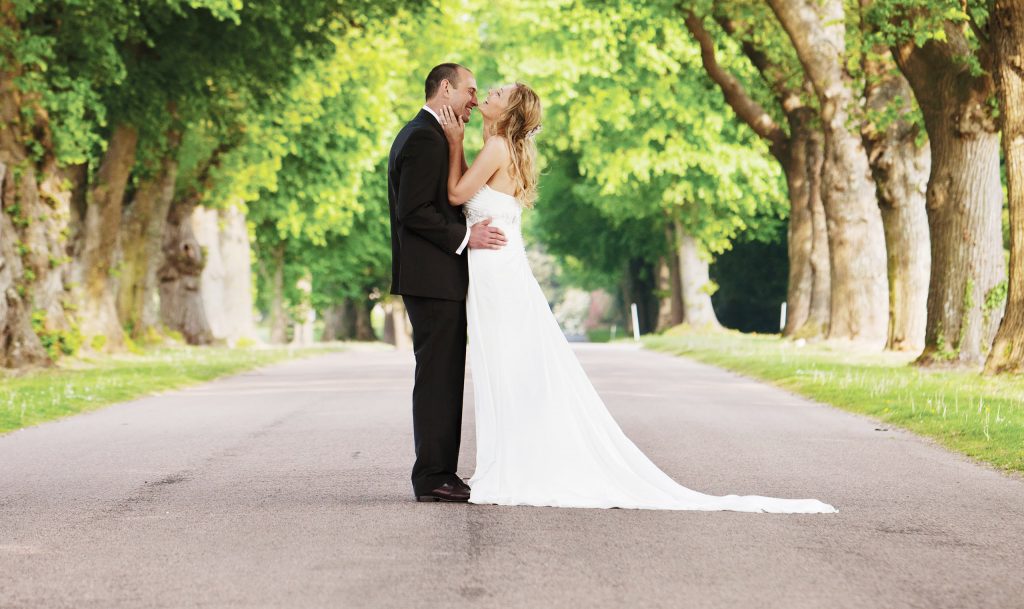
- The kiss. Obvious, and still essential. Ask for a slow one. Quick kisses are usually over before the shutter goes.
- The silhouette. Against a bright sky or a lit background. It’s all shape, so the pose has to be clear: a gap between them, a clean outline.

- The laugh. Not a pose at all, really. Ask them something daft and keep shooting.
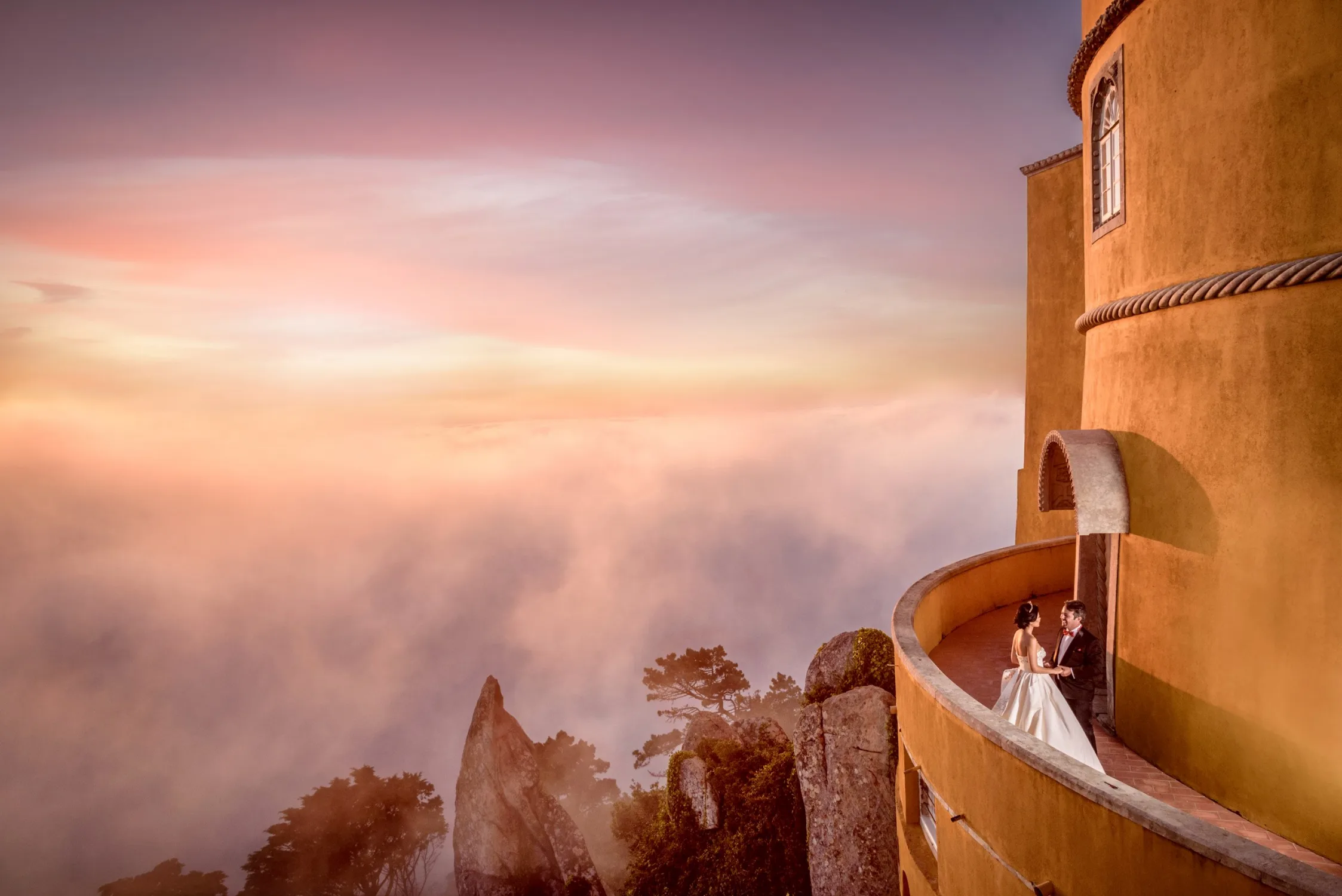
- The pause. Sitting together or looking out over the view, not at each other. A quiet frame in a loud day.

If you’re a couple reading this and wondering whether you’ll feel awkward: most people do for the first two minutes, and then they don’t. That’s what the direction is for. More on how I approach the portraits on my editorial wedding photography page, and if you’d like to check a date, the form is below.
Barrie