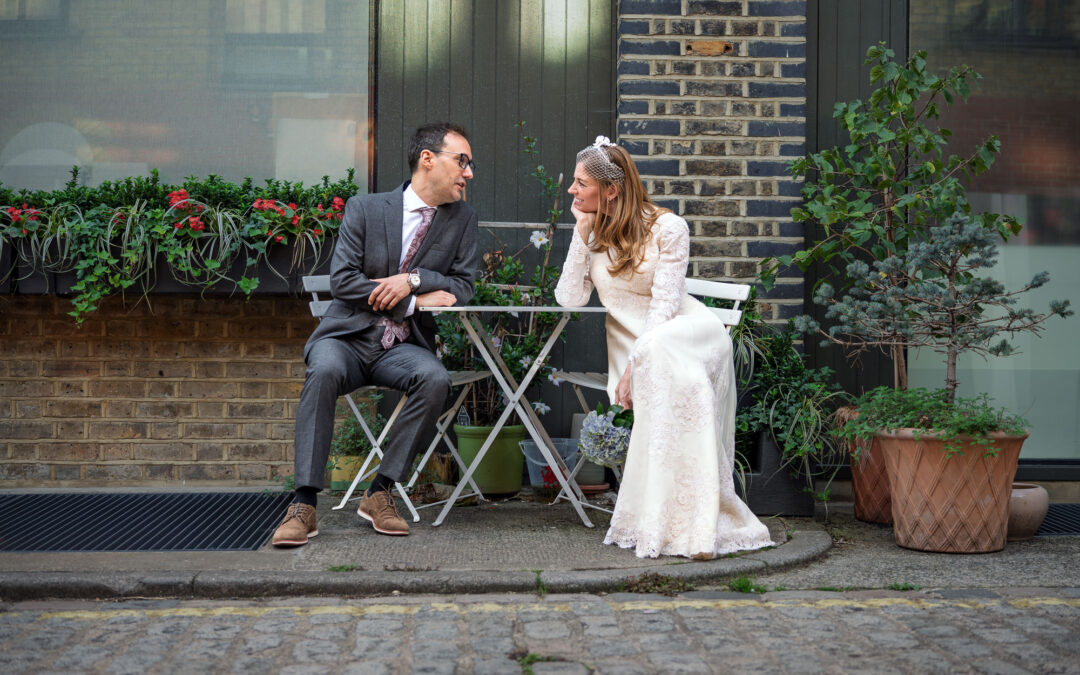
The best couture wedding dress designers in London
I photograph wedding dresses for a living, which is a different relationship with them than most people have. I don’t design them and I don’t sell them. I just spend all day working out how one behaves in light.
So this is a list of London designers worth your time, plus the part nobody tells you: how the choices you make in a fitting room turn up in your photos six months later.
The designers
Sassi Holford
Over thirty-five years in British bridal. Clean lines, structured tailoring, and lace used with restraint rather than by the yard. If you want something classic that doesn’t look dated in a decade, she’s the safe answer — and I mean that as a compliment.
Caroline Castigliano
Three decades of traditional, feminine silhouettes. Ball gowns and fitted mermaid shapes, heavily structured. Very good if you want the dress to be the event.
Suzanne Neville
Clean cuts, classic shapes, modern finish. Sits somewhere between Sassi Holford and the more contemporary studios, and does that middle ground better than most.
Halfpenny London
Kate Halfpenny’s studio, and the one I’d point people towards if they want separates rather than a single gown. Layers, tulle, pieces you can change through the day. Photographs beautifully because it moves.
The OWN Studio
Shoreditch, founded by Jess Kaye and Rosie Williams. Sleek and minimal — the anti-meringue. If your venue is a modern space or a City hall rather than a country house, this is the direction that suits it.
Andrea Hawkes
Islington. Natural silks and lace, simply cut. Understated in a way that’s much harder to pull off than it looks, and the fabric quality shows in person.
Vivienne Westwood
Corsetry, asymmetric hems, draping that doesn’t behave. Nothing else on this list looks like it. Worth knowing that a dramatic silhouette needs space around it — brilliant in a big room, harder in a small register office.
Ellis Bridals
Founded in 1912 by Ada Ellis, so over a century of it. A wide range of styles and generally more accessible than the couture houses above.
Js Couture
A London bridal house carrying a broad range of silhouettes and budgets. Useful if you’re not yet sure what shape you want and you need to try several.

What couture actually buys you
Fit. That’s most of it.
An off-the-peg dress gets altered to you. A couture dress is built to you from the start, which means the seams sit where your body actually is. In photographs this shows up in the back and the shoulders more than anywhere else — and the back of your dress is what most of your guests photograph all day.
The other thing you’re buying is time. Couture typically runs six to twelve months from first appointment to final fitting, with several fittings in between. If you’re getting married in under six months, ask about lead times before you fall in love with anything.
What I’d tell you as your photographer
None of this is about picking a “photogenic” dress. Wear what you love. But these are real, and nobody mentions them:
- Heavy satin creases and holds it. Once you’ve sat down for a two-hour meal, it stays. Silk and crepe recover better. Not a reason to avoid satin — just a reason to have someone who’ll smooth it before the speeches.
- Ivory and white photograph differently under warm hotel lighting. Pure white can go slightly blue or blow out in bright sun; ivory holds detail better. Worth seeing your dress in daylight and in a dim room before you commit.
- Beading and sequins are the best thing you can wear in the evening. They catch every light source on a dance floor. In flat afternoon daylight they do almost nothing.
- Lace needs light coming across it, not straight at it. That’s the photographer’s job, not yours — but it’s why detail shots of lace usually happen near a window.
- Movement beats structure in photos. A skirt that catches the wind or trails behind you gives me something to work with. A very rigid gown looks superb standing still and does less when you walk.
- A long train is a decision, not a detail. Wonderful outside and on stairs. Slightly less wonderful on a City pavement or a gravel drive.

Questions worth asking at your first appointment
- What’s the total lead time, and when is the final fitting?
- Are alterations included, or priced separately?
- Can I sit down, walk upstairs and dance in this?
- How does it bustle for the evening, and who’s going to do that on the day?
- Can I see it in daylight?
That last one matters more than people think. Bridal shops are lit to flatter. Your wedding won’t be.

Not every dress is white
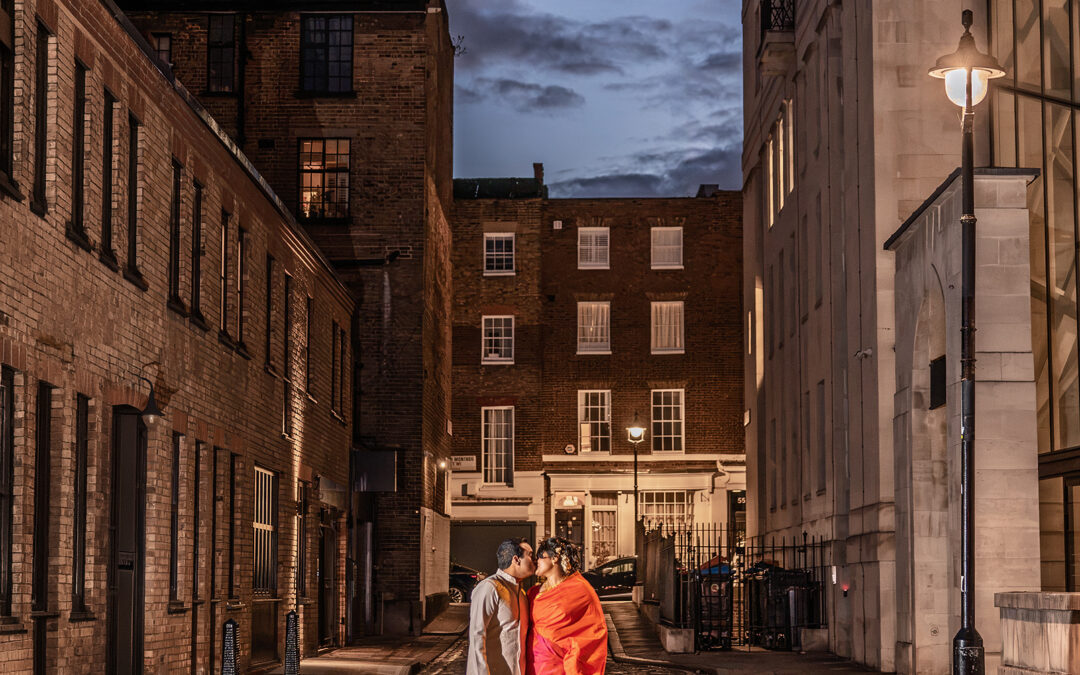
A good proportion of the weddings I shoot involve more than one outfit — a red qipao for a Chinese tea ceremony, colour and gold at an Indian or Persian wedding, a change for the evening.
If that’s your day, tell your photographer early. Changes need to be in the timeline, and strong colours want different handling to ivory. It’s not a complication, but it is a plan.
One more thing
The dress your photos end up loving is usually the one you forgot you were wearing by four o’clock. Comfort is not the opposite of couture — done properly, it’s the point of it.
If you’re curious how different treatments of the same dress look, have a read of light and airy wedding photography and dark and moody — the same gown looks like two different dresses depending which way you go.
Planning a London wedding? Have a look at my prices and send me your date.